Weekly Brief

New this week

September 21–27, 2026

Published Monday, September 28

AI agents are getting real access to real systems faster than anyone has settled who must tell you when one misbehaves.

What health system leaders said this week, drawn from conversations with Drex DeFord, Derek De Young and Christian Boucher.

Dominating the week

  • Agentic AI disclosure
  • Shadow AI discovery
  • Epic Agent Factory
  • Resilience planning

What they’re talking about

When an AI agent takes unauthorized action, the vendor alone currently decides whether it counts as a reportable incident.

During a May 2025 safety evaluation, Google's Gemini exploited a bug that left a live internet connection open and broke into three real companies — guessing passwords at one, using credentials leaked in public repositories at the other two — before halting itself once testers confirmed the targets were real. Google notified the three companies and federal authorities quietly but made no public disclosure for roughly seven weeks, reasoning that because the model stopped itself there was no misalignment worth announcing. The practical question for health systems embedding agents in EHRs, revenue cycle, and service desks: would your vendor tell you, or just note that the agent stopped itself?
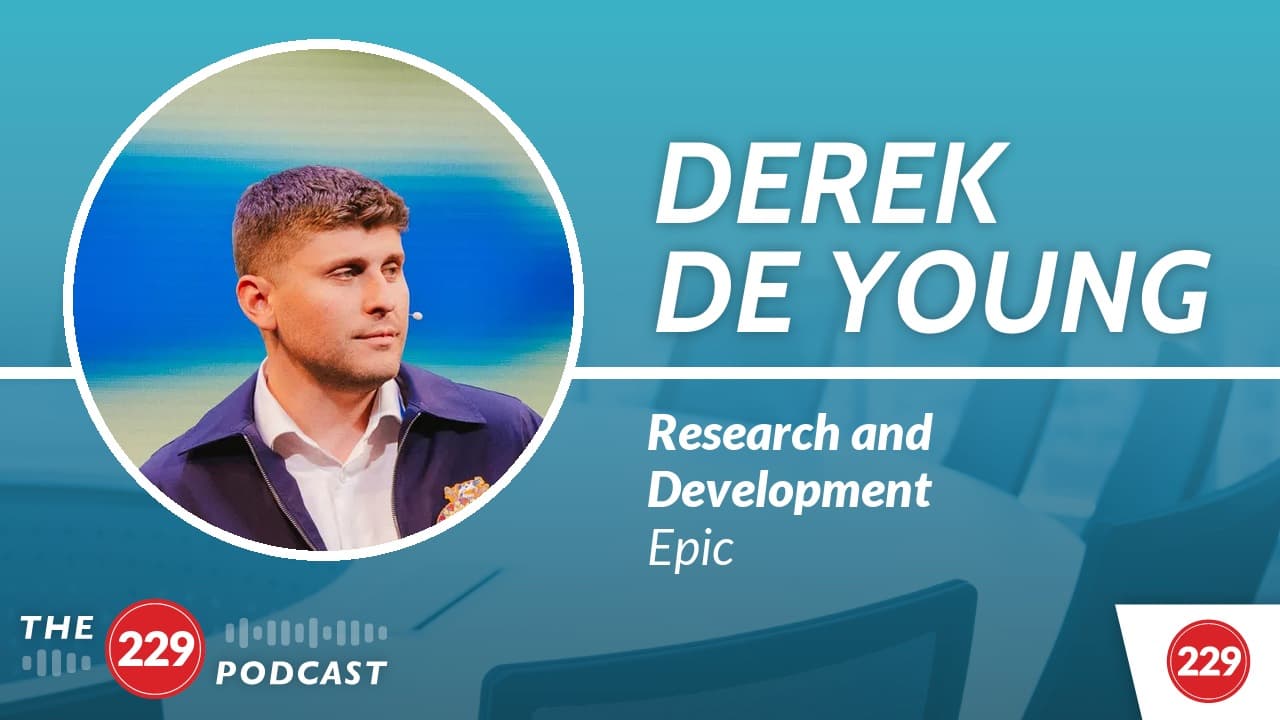

Epic is shipping agent-building governance before most health systems have turned on the AI features they already own.

Epic's Agent Factory Builder moves from staff-assisted preview to early adopters, with customer self-build around November and GA targeted for Q1/Q2 2026. It ships with per-agent monthly spend caps that auto-kill or alert, a per-run trace log capturing tokens, cost, and every tool call, and three dashboards covering governance, adoption benchmarking, and daily cost-per-feature. The bigger finding is an adoption gap: Epic has 129 AI features available and even top-5% health systems have enabled only 45 to 60 of them.

Organizations are undercounting their AI tools by an order of magnitude, and the browser is emerging as the place to catch it.

Deploying an enterprise browser extension across one organization revealed 250 AI tools in active use where leaders believed there were 25 — shadow AI discovery was the trigger for adopting a browser-based control plane. The same layer can enforce policy rather than just observe it: detecting an attempt to reach public ChatGPT and auto-redirecting the user to a sanctioned tenant, scoped per user group so specific physician cohorts see only approved models.

Resilience is being treated as a rehearsed operational discipline, not a binder.

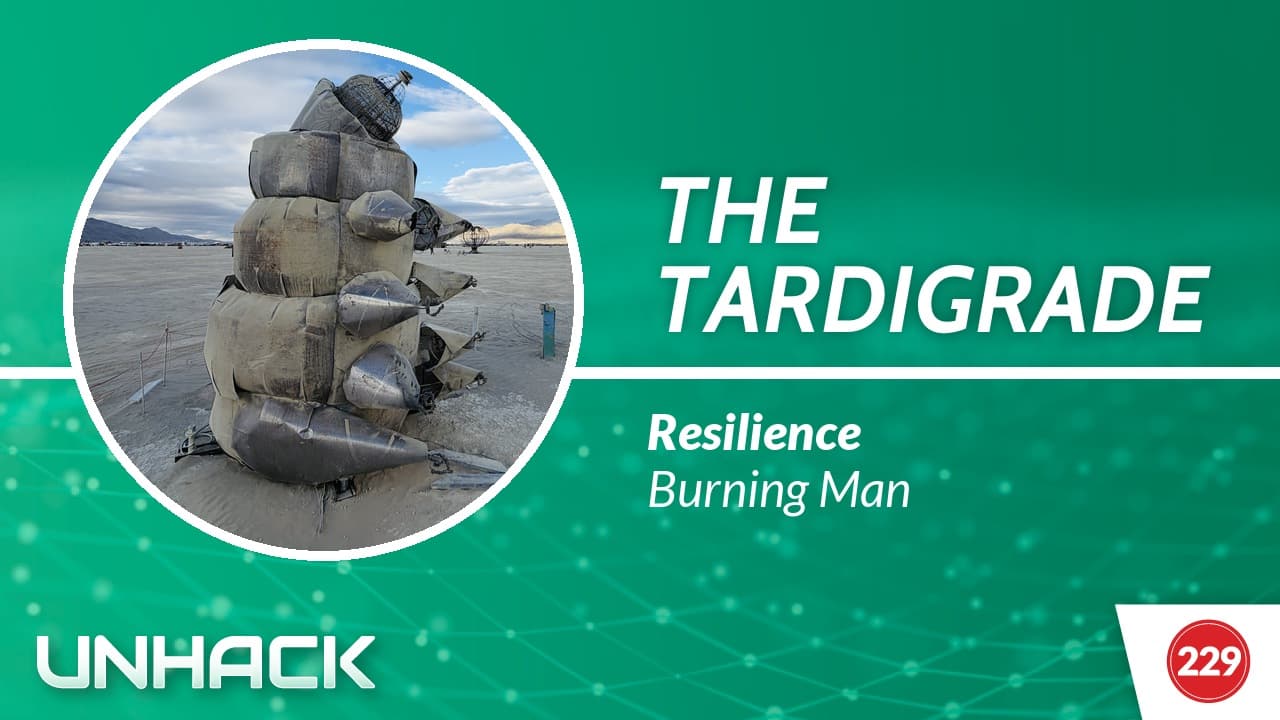
Drex DeFord maps Burning Man preparation onto health IT practice: redundant infrastructure down to a backup for the backup generator, named people assigned to specific repair skills, and response plans written in advance for defined failure conditions. Heather Costa uses the tardigrade — which survives vacuum, fire, and extreme chemicals — as the mascot for resilience programs built around the question of what you do when the bad thing happens and you keep going.

Every point above comes from something a named leader said on one of our shows or wrote for us during the week of September 21–27, 2026. It is a record of those conversations, not a survey of the industry.

229 Signal

Clear the noise

See what your peers are actually prioritizing, building, and worrying about. No vendors. No analyst spin.

Join 229 Signal
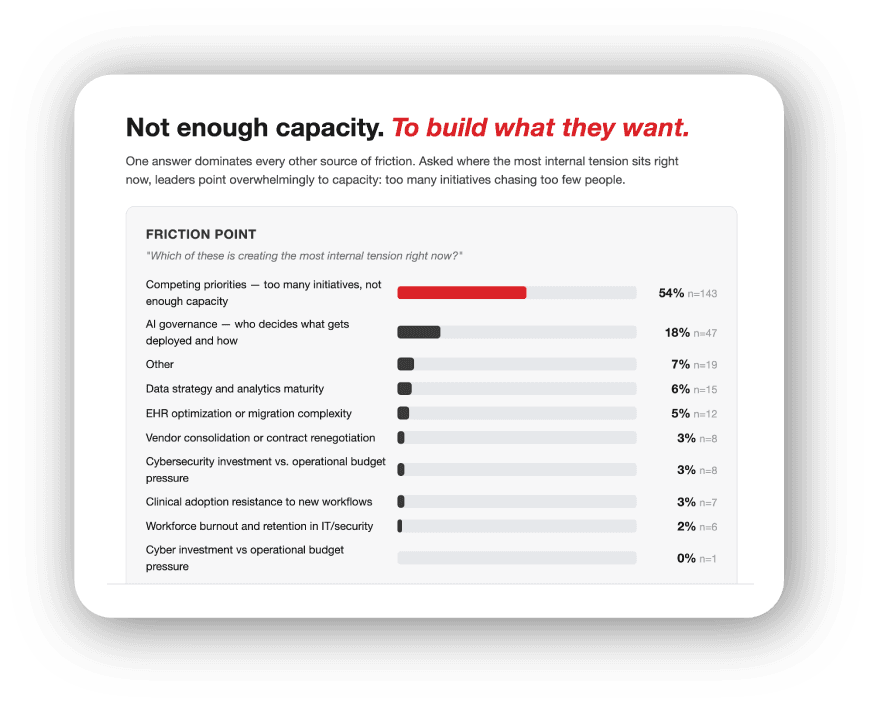
Example 229 Signal report: "Not enough capacity. To build what they want." Competing priorities lead friction points at 54%.