
 Apple Podcasts
Today in Health IT · ~25 min listen
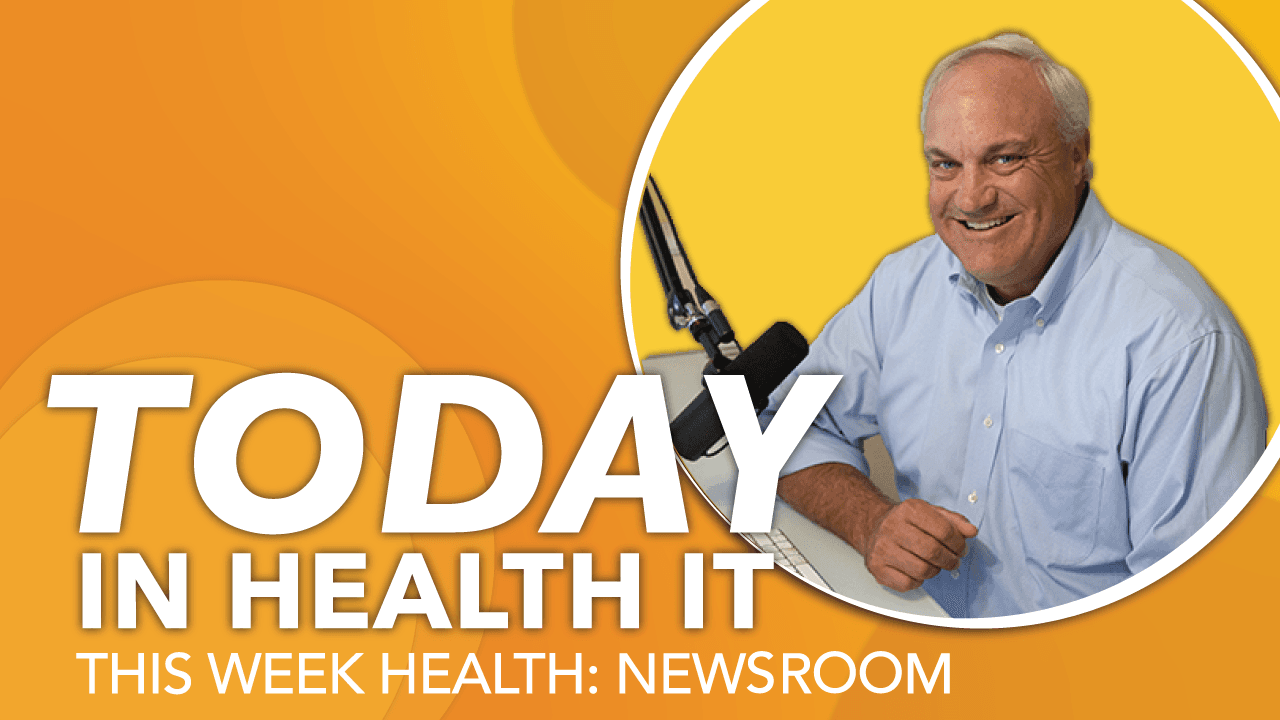
I caught up with Scott Joslyn, the CIO for UC Irvine. There is a wisdom that only comes from experience and Scott's decades of experience comes through in this conversation. I hope you enjoy.
Bill Russell 00:00:03 Today in health, it, Bill Russell 00:00:04 Another one of our interviews and action. Bill Russell 00:00:05 This comes from the healthcare to healthcare event, which I was a guest Bill Russell 00:00:09 at from the serious health care team. Bill Russell 00:00:11 It was in Montana. Bill Russell 00:00:13 And I was able to sit down with a handful of CEOs. Bill Russell 00:00:16 And I'm going to share those with you here shortly. Bill Russell 00:00:19 My name is bill Russell. Bill Russell 00:00:20 I'm a former CIO for a 16 hospital system and creator of this week in health. Bill Russell 00:00:24 It. Bill Russell 00:00:24 A channel dedicated to keeping health it staff current and engaged. Bill Russell 00:00:28 I hope you're enjoying these interviews and action. Bill Russell 00:00:31 We were able to do these interviews at the health conference, the Bill Russell 00:00:34 chime conference, and now the healthcare to healthcare event. Bill Russell 00:00:37 I've really enjoyed doing them. Bill Russell 00:00:39 , just a reminder. Bill Russell 00:00:40 We're going to get back to our normal programming where I take Bill Russell 00:00:42 a new story, break it down. Bill Russell 00:00:44 And talk about why it matters to health. Bill Russell 00:00:46 It. Bill Russell 00:00:47 We're going to be doing that as soon as the interviews are done we have Bill Russell 00:00:51 done 10 from the chime conference eight from the health conference and Bill Russell 00:00:55 we have five from the healthcare to health care conference so i hope you Bill Russell 00:00:59 enjoy another one of these interviews Bill Russell 00:01:02 all right. Bill Russell 00:01:02 We're doing another interview from the healthcare to healthcare summit, a Bill Russell 00:01:06 serious event that is for their clients. Bill Russell 00:01:09 I'm here with Scott, Jocelyn, chief information officer Bill Russell 00:01:12 and chief innovation officer. Bill Russell 00:01:14 Correct. Bill Russell 00:01:14 Anything else we're going to add to that anytime Scott Joslyn 00:01:16 soon. Scott Joslyn 00:01:16 I don't want anything added to that. Scott Joslyn 00:01:18 It's fine. Scott Joslyn 00:01:18 The way it is Bill Russell 00:01:19 at a UCI. Bill Russell 00:01:21 So you made the move from Memorial care to UCI, Scott Joslyn 00:01:24 correct? Scott Joslyn 00:01:24 I've been at UCI health for almost two years. Scott Joslyn 00:01:28 And another couple of. Bill Russell 00:01:29 Two years, two years in a couple of weeks. Bill Russell 00:01:32 Wow. Bill Russell 00:01:32 Um, so what's what's top of mind. Bill Russell 00:01:35 I mean, there are two very, are they, similar systems Bill Russell 00:01:39 are very different systems. Bill Russell 00:01:41 They are once, once an academic medical center, once not an academic model, Scott Joslyn 00:01:45 Memorial care is a non-academic medical center, although Scott Joslyn 00:01:48 they train residents and the likes. Scott Joslyn 00:01:51 So, but they're not academic per se. Scott Joslyn 00:01:53 UCI medical center is an academic medical center. Scott Joslyn 00:01:56 It's got a school of medicine, the school of pharmacy school. Scott Joslyn 00:01:59 The school of public health, we educate, we produce physicians Scott Joslyn 00:02:04 and, um, residents and the like, Bill Russell 00:02:06 so do you find those two to be very distinct in terms Bill Russell 00:02:09 of the requirements of the role? Scott Joslyn 00:02:12 Well, I was always told that academic medical centers are more Scott Joslyn 00:02:15 complex than I think to some degree. Scott Joslyn 00:02:17 It's true. Scott Joslyn 00:02:18 Um, I found them to be somewhat more complex and at the same time, more Scott Joslyn 00:02:23 interesting, a more diverse, I really enjoy working with the faculty chairs. Scott Joslyn 00:02:28 It's great to know that there's a whole university, that's so much behind us, Scott Joslyn 00:02:32 but the schools of engineering and computer science, for example, produce Scott Joslyn 00:02:36 graduates that could be potential employees for us, but they're also Scott Joslyn 00:02:39 doing all kinds of incredible research, whether it's cyber security, um, in Scott Joslyn 00:02:44 particular researchers research on data. Scott Joslyn 00:02:47 So, um, one of our faculty physicians produced a predicted model with respect Scott Joslyn 00:02:53 to COVID the likelihood that a patient will end up on a vent for example. Scott Joslyn 00:02:56 And so that kind of thing happens, um, alongside regular ordinary care. Scott Joslyn 00:03:01 So I there's a lot of synergy. Scott Joslyn 00:03:04 Um, I think it's terrific. Bill Russell 00:03:06 And you guys are, you guys are building a new building. Scott Joslyn 00:03:08 We're building a new medical center, 145 bed facility Scott Joslyn 00:03:13 to open in four and a half. Scott Joslyn 00:03:15 It will be on the campus of the university. Scott Joslyn 00:03:17 So our president medical center, 420 beds soon to be four 60 is in the Scott Joslyn 00:03:22 city of orange, which is about 10 miles north of the university campus. Scott Joslyn 00:03:27 So four and a half years from now will be, um, two hospitals, not one. Scott Joslyn 00:03:31 And, um, there you Bill Russell 00:03:33 are. Bill Russell 00:03:34 Yeah. Bill Russell 00:03:34 And you're right in the middle of a very competitive market Bill Russell 00:03:37 in a competitive landscape. Bill Russell 00:03:39 I love the fact that you have the innovation officer. Bill Russell 00:03:42 And we actually face sort of similar challenges cause I was CIO in that Bill Russell 00:03:46 same market and you have some pretty advanced, um, innovation, it capabilities Bill Russell 00:03:52 around engagement around, uh, around the consumer, especially around the consumer. Bill Russell 00:03:57 I think both Kaiser and Providence have arms that are really focusing Bill Russell 00:04:01 on that consumer, that consumers. Bill Russell 00:04:03 Um, how, how are you viewing that? Bill Russell 00:04:05 How is, how is a UCI going to be able to offer your, your community, Bill Russell 00:04:11 that level of, uh, experience? Scott Joslyn 00:04:14 Well, I think it's a catch up game for us in many Scott Joslyn 00:04:18 respects, largely because Kaiser in particular, but also Providence. Scott Joslyn 00:04:23 Um, we're early, um, Providence has their incubator and Reverend Martin, and Scott Joslyn 00:04:27 they're just a very good organization. Scott Joslyn 00:04:29 And they've been at it for awhile. Scott Joslyn 00:04:31 I think the organization, they really laid things out well with Keiser. Scott Joslyn 00:04:37 Um, I mean, just look at their thrive program, what an Scott Joslyn 00:04:40 incredible label for something. Scott Joslyn 00:04:43 It was just a beautiful label as a brilliant piece of marketing and they Scott Joslyn 00:04:47 have, and they've been on epic now. Scott Joslyn 00:04:49 They sign their contract and not August of 2003, it took a little longer than Scott Joslyn 00:04:54 Memorial care to go live, but they've been live for decade and a half. Scott Joslyn 00:04:57 They have lots of. Scott Joslyn 00:04:59 And the very serious about it. Scott Joslyn 00:05:01 Um, they have lots of people working over the innovation space Scott Joslyn 00:05:04 and they, um, have focused on the experience of their members, not Scott Joslyn 00:05:09 even customers, but their members. Scott Joslyn 00:05:11 And they've done a lot to steer them, manage them, guide them, educate them. Scott Joslyn 00:05:16 And I think they set the bar. Scott Joslyn 00:05:18 So for, for me, I look at it as we need to be that good. Scott Joslyn 00:05:22 Um, um, and, and in some ways maybe do things that are different that are Scott Joslyn 00:05:25 unique to us as an academic model. Scott Joslyn 00:05:28 But they just execute exceptionally well. Scott Joslyn 00:05:30 So I admire them. Scott Joslyn 00:05:32 Um, and yes, they are. Scott Joslyn 00:05:33 They are certainly competitors. Scott Joslyn 00:05:34 We live in a very competitive space. Bill Russell 00:05:37 Do you break that experience down and say, okay, we're going to work Bill Russell 00:05:40 on this aspect of the experience that the basics, the blocking and tackling, Bill Russell 00:05:45 if you will, the, the communication between the clinician and the patient, Bill Russell 00:05:50 the communication around the scheduling, the communication around a procedure. Bill Russell 00:05:54 I mean, how do you, how do you break it down by. Bill Russell 00:05:56 Pretty big challenge, right? Bill Russell 00:05:58 Experience means a lot of things. Scott Joslyn 00:06:00 You, you need to, to break it apart into the pieces and Scott Joslyn 00:06:05 tackle the ones that matter to us from an operational standpoint, but more Scott Joslyn 00:06:09 importantly, the ones that matter to the patient and access is a problem. Scott Joslyn 00:06:13 Getting an appointment is a problem. Scott Joslyn 00:06:15 Communicate with your providers, the problem. Scott Joslyn 00:06:17 So all of those represent an area of activity, even, um, consents or Scott Joslyn 00:06:22 video visits or a remote patient. Scott Joslyn 00:06:25 But first and foremost, it is, um, to have a consistent picture Scott Joslyn 00:06:31 for all the various doors that UCI health represents virtually. Scott Joslyn 00:06:35 So to speak, whether it's get an appointment, find Scott Joslyn 00:06:37 out something I have cancer. Scott Joslyn 00:06:39 Um, I'd like to get a consult, whatever that is is to put those Scott Joslyn 00:06:43 together into a series of capabilities that we put inside our website. Scott Joslyn 00:06:47 And the challenge is one to get them done. Scott Joslyn 00:06:50 Secondly, To array them in such a way that it's a somewhat seamless experience. Scott Joslyn 00:06:55 And I have tried, and we are starting to crest the issue of, for example, we only Scott Joslyn 00:07:01 want you to be a stranger once I want to remember you just the way United remembers Scott Joslyn 00:07:07 me or fidelity remembers me, or for that matter, the water company remembers me. Scott Joslyn 00:07:12 When I come back, we don't do that. Scott Joslyn 00:07:15 Good a job at healthcare, but we also have lots and lots of doors. Scott Joslyn 00:07:18 So I think that's first and foremost, As part of the experience thing is like, Scott Joslyn 00:07:22 we remember you, we value your time. Scott Joslyn 00:07:25 We don't want you to have to repeat yourself. Scott Joslyn 00:07:28 And I'll set in set aside intake forms. Scott Joslyn 00:07:30 Those are pain in the neck as well. Scott Joslyn 00:07:31 You have to fill this out multiple times. Scott Joslyn 00:07:33 We need to solve those problems. Scott Joslyn 00:07:35 That bothers patients experience matters and drives our clinicians nuts. Bill Russell 00:07:40 Yeah. Bill Russell 00:07:41 I, I do want to talk about your first hundred days, but I also want to Bill Russell 00:07:44 talk about the new facility because from time to time, I run into people Bill Russell 00:07:48 that are doing new facilities. Bill Russell 00:07:50 And the biggest challenge with the new facility is it's new on the day it was Bill Russell 00:07:54 opened, but how do you keep it fresh? Bill Russell 00:07:56 You know, how do you, how do you plan for what it needs to be? Bill Russell 00:08:00 You're going to have it done in four and a half years. Bill Russell 00:08:02 How do you plan for what it needs to be 10 years from now, or even 15 years from now? Bill Russell 00:08:07 And is that even possible? Bill Russell 00:08:08 And, and what's, what's your thought process going Scott Joslyn 00:08:10 into that? Scott Joslyn 00:08:11 Well, it, um, I think first, the first thing is to recognize. Scott Joslyn 00:08:18 And you may recall on my presentation this morning, one of my fears is how do Scott Joslyn 00:08:23 we avoid building a new old hospital? Scott Joslyn 00:08:26 We have to think outside the box and are there ways that we can Scott Joslyn 00:08:32 keep it competitive, so to speak. Scott Joslyn 00:08:35 And I don't mean so much competitive with others, but on par with all the new Scott Joslyn 00:08:41 capabilities that are there, we can't rebuild the facility in room sizes will Scott Joslyn 00:08:46 be room sizes, but we know there'll be. Scott Joslyn 00:08:48 But what's in the patient room and how the patient room functions Scott Joslyn 00:08:52 is going to evolve over time. Scott Joslyn 00:08:54 So I don't know other than to one, be aware to have awareness. Scott Joslyn 00:08:58 Secondly, we know that being situationally aware, loaded with sensors, um, and having Scott Joslyn 00:09:06 the ability to run essentially as sort of a factory and all of its various lines. Scott Joslyn 00:09:11 And to watch that factory perform, to look for bottlenecks, cure Scott Joslyn 00:09:15 bottlenecks, and maximize our. Scott Joslyn 00:09:17 For the sake of maximizing the amount of care we can provide. Scott Joslyn 00:09:21 The second part of that is are there pieces of equipment, even Scott Joslyn 00:09:26 something as mundane as a bed that we might think of as a service? Scott Joslyn 00:09:31 Could I have my monitoring from GE or one of the other companies be, um, not Scott Joslyn 00:09:36 just a one-time or periodic capital purchase with follow-on depreciation? Scott Joslyn 00:09:41 Could it be. Scott Joslyn 00:09:43 Something like a subscription or a service now that may have a price Scott Joslyn 00:09:46 premium, that's all to be negotiated. Scott Joslyn 00:09:49 But the idea is, is to keep pace with Phillips or Spacelabs or one of the Scott Joslyn 00:09:56 other monitoring companies so that we are using relatively new equipment Scott Joslyn 00:10:01 all the time on a continuous basis. Scott Joslyn 00:10:04 So maybe the facilities will look different, but by and Scott Joslyn 00:10:06 large, you know, patient will be a patient room, but we want. Scott Joslyn 00:10:10 The technology in those rooms fresh. Scott Joslyn 00:10:13 Um, and I think a lot of it's now going to be behind the scenes and virtual. Scott Joslyn 00:10:19 So it's less physical, it's more virtual. Bill Russell 00:10:21 Uh, the thing I liked about your presentation this morning Bill Russell 00:10:23 is you have so many years under you. Bill Russell 00:10:26 Somebody who walked into what you walked into probably Bill Russell 00:10:28 would be a little overwhelmed. Bill Russell 00:10:30 And you're just looking at it going. Bill Russell 00:10:32 I've seen a lot of this before. Bill Russell 00:10:33 I know what it looks like to build a building. Bill Russell 00:10:35 I know that I know the challenges and the ramification. Bill Russell 00:10:38 Um, but it was interesting how you touched on so many different things you Bill Russell 00:10:42 touched on, uh, on innovation, innovation framework, you touched on, uh, labor, Bill Russell 00:10:47 labor challenges, how you're doing that you touched on, uh, not only the facility. Bill Russell 00:10:53 Yeah. Bill Russell 00:10:53 We're building silly, but we're also keeping an eye on hospitals and Bill Russell 00:10:55 we're advancing in hospital at home. Bill Russell 00:10:57 And those kinds of things, just keeping an eye on those Bill Russell 00:10:59 companies and what's going on. Bill Russell 00:11:00 Um, you know, you, you were active in the conference. Bill Russell 00:11:04 Around clinical innovation as well, clinical automation as well. Bill Russell 00:11:09 Um, do you think there's something that comes with having Bill Russell 00:11:11 done this for so many years? Bill Russell 00:11:13 Is it your clinical background or is it just having done this for so many years, Bill Russell 00:11:17 you're able to, to not get overwhelmed by it because there is a lot going on. Bill Russell 00:11:22 It's funny. Bill Russell 00:11:22 Every time I ask a CIO what's top of mind, I get different answers every day. Bill Russell 00:11:26 It's kind of amazing. Bill Russell 00:11:28 Well, Scott Joslyn 00:11:29 it's hard to pick one thing. Scott Joslyn 00:11:30 Um, I think he experienced really bad. Scott Joslyn 00:11:33 Long ago I practiced pharmacy. Scott Joslyn 00:11:35 I know what the physicians do. Scott Joslyn 00:11:37 I can generally speak their language. Scott Joslyn 00:11:39 A degree in business helps to understand marketing or for that matter, even Scott Joslyn 00:11:42 micro economics, some of the theories behind outsourcing, for example, um, Scott Joslyn 00:11:47 and then, you know, having programmed and does some things like that. Scott Joslyn 00:11:49 I have some vague recollection of technology and frankly, that's Scott Joslyn 00:11:52 probably one of my weakest spots, but there's good people to do that. Scott Joslyn 00:11:55 But I think it's just years of experience. Scott Joslyn 00:11:57 And as I cited in the presentation this morning, I grew up in a period of time Scott Joslyn 00:12:02 where there was self-development followed by best of breed systems, followed Scott Joslyn 00:12:07 by monolithic systems, such as epic. Scott Joslyn 00:12:10 And now in the current period, which has almost like another big Scott Joslyn 00:12:14 sea change to where the EHR is obviously critically important. Scott Joslyn 00:12:18 Its footprint has expanded. Scott Joslyn 00:12:20 It's helped. Scott Joslyn 00:12:22 Organize the various departmental systems into a single thing. Scott Joslyn 00:12:25 And it's no longer complete in that. Scott Joslyn 00:12:28 So much of the data lives outside of the HR. Scott Joslyn 00:12:31 So not to subvert it, but it's to surround it. Scott Joslyn 00:12:34 And it almost looks to some degree like best of breed again. Scott Joslyn 00:12:38 Um, I actually think it's two things going on, right. Scott Joslyn 00:12:42 As I use the phrase, creative assembly, it is going out and picking partners Scott Joslyn 00:12:47 and others to augment my EHR, to be more complete across multiple venues of care, Scott Joslyn 00:12:52 including things outside the facility. Scott Joslyn 00:12:54 And I think the other thing is happening. Scott Joslyn 00:12:56 It's not like best of breed at all, but super aggregation. Scott Joslyn 00:12:59 It is. Scott Joslyn 00:12:59 And the aggregation relates to data. Scott Joslyn 00:13:01 All of these things that we're putting in place to generate Scott Joslyn 00:13:04 data and to generate signals. Scott Joslyn 00:13:06 And the interesting thing about being part of an academic medical Scott Joslyn 00:13:09 center is the ability to inject. Scott Joslyn 00:13:12 The signals and scale and begin to look for signals in the noise. Scott Joslyn 00:13:15 So that's a by-product of having these systems is that we're generating Scott Joslyn 00:13:19 data, um, about our operational environment to, for example, do a Scott Joslyn 00:13:24 better job at predicting readmission. Scott Joslyn 00:13:27 Every readmission costs us, or basically I'm sorry. Scott Joslyn 00:13:31 Every 0.1% improvement in readmission is about a four or $500,000 impact Scott Joslyn 00:13:38 to our bottom line in our interest. Scott Joslyn 00:13:41 Economically is in our interest for the sake of the patient. Scott Joslyn 00:13:45 You know, we don't want them coming back, coming back as an error. Scott Joslyn 00:13:48 That's why it is the way it is and regulation. Scott Joslyn 00:13:50 So I, remote monitoring program, for example, or our mobile urgent care Scott Joslyn 00:13:55 is to have people go home safely and don't allow them to decompensate Scott Joslyn 00:14:00 and attempt the problem immediately. Scott Joslyn 00:14:01 It's in their interest, it's in our interest. Bill Russell 00:14:04 So you were one of the early adopters of epic. Bill Russell 00:14:10 Kudos for that. Bill Russell 00:14:11 I guess my question is in this best of breed world, what's the, what's the move. Bill Russell 00:14:16 Now that a CIO is making that you're maybe 10 years from now, Bill Russell 00:14:20 I'm interviewing them going. Bill Russell 00:14:21 You were the first one to make the move there or whatever. Bill Russell 00:14:24 What's that, what's that thing that you're looking at going? Bill Russell 00:14:26 Is it, is it these data aggregation platforms? Bill Russell 00:14:29 Is it, is it, um, you know, the, the, uh, computer vision? Bill Russell 00:14:34 I mean, what, what is it that you're looking at going? Bill Russell 00:14:36 This could, this could fundamentally. Bill Russell 00:14:38 Change some things, how we, how we practice healthcare. Scott Joslyn 00:14:44 Um, well I think it's in the area of AI and with that Scott Joslyn 00:14:48 almost by definition, data aggregation or AI operates and does well when Scott Joslyn 00:14:53 it's able to see a bunch of data. Scott Joslyn 00:14:54 Now we've heard in the presentation today, the, depending on how you Scott Joslyn 00:14:59 approach AI, it doesn't always take billions and billions of records. Scott Joslyn 00:15:02 It depends on how you do it, but I think it's AI and. Scott Joslyn 00:15:07 Along with that, what we've heard. Scott Joslyn 00:15:09 And from gardener, for example, in the real-time health system, isn't an Scott Joslyn 00:15:13 environment that's situationally aware. Scott Joslyn 00:15:16 What does that mean? Scott Joslyn 00:15:17 There's sensors and it's not, we're trying to spy on people. Scott Joslyn 00:15:21 It is more about what's going on. Scott Joslyn 00:15:23 What can the computer tell us about the activities in the medical center? Scott Joslyn 00:15:28 What's the patient doing? Scott Joslyn 00:15:29 Are they turning off in enough? Scott Joslyn 00:15:31 Do they present a false. Scott Joslyn 00:15:33 Um, what does that tell us about the care and can we optimize it, Scott Joslyn 00:15:37 but it's the changes going on? Scott Joslyn 00:15:39 I think in the area of automation, which along with it means computer Scott Joslyn 00:15:42 vision, um, are decided, for example, Bill Russell 00:15:48 I know it's getting loud around us. Scott Joslyn 00:15:50 That's right. Scott Joslyn 00:15:50 Um, they're working on a new chip that actually can smell now. Scott Joslyn 00:15:55 Humans can smell pseudomonas and dogs can smell. Scott Joslyn 00:16:00 Um, and so what else can be, it's another sense beyond envision or in the case Scott Joslyn 00:16:07 of artist's side hearing, which we've seen at epic to be able to automatically Scott Joslyn 00:16:11 do the note with through NLP. Scott Joslyn 00:16:13 Now you have the idea of even being able to smell in the environment. Scott Joslyn 00:16:17 So I think it is the, um, the absorption of that data for the sake of Scott Joslyn 00:16:23 operations, intervention and improved. Scott Joslyn 00:16:27 And then I think it's the collection of that data over time that Scott Joslyn 00:16:32 allow us to find new insights. Scott Joslyn 00:16:35 Um, there's all kinds of debate in the literature about sepsis, for example, Scott Joslyn 00:16:39 what's the best algorithm for that. Scott Joslyn 00:16:41 And there's some debates among the HR vendors as to whether they have Scott Joslyn 00:16:44 something better than somebody else. Scott Joslyn 00:16:45 But nevertheless, there are things that are possible. Scott Joslyn 00:16:49 And I remember my days, a pharmacy that changes a shift, a nurse Scott Joslyn 00:16:54 would say, who'd been on all night. Scott Joslyn 00:16:56 I'm in my patient's going to crash. Scott Joslyn 00:16:58 What do you mean? Scott Joslyn 00:16:59 Well, the chances are they're going to code she, or he couldn't Scott Joslyn 00:17:03 really tell you why it was the 15 or 20 years of experience they had. Scott Joslyn 00:17:07 They could see something. Scott Joslyn 00:17:10 Now the computer can see that often in the physiological monitors, temperature, Scott Joslyn 00:17:14 pulse, and respiration, respiration changes that are very subtle collectively Scott Joslyn 00:17:18 together that are seen by instruments. Scott Joslyn 00:17:20 Can now do those kinds of things. Scott Joslyn 00:17:22 A nurse used to be able to quote, see that it was her. Scott Joslyn 00:17:26 We're now intuitions move to a new level. Scott Joslyn 00:17:30 Some of the other stuff is now done by Peter. Bill Russell 00:17:32 Yeah. Bill Russell 00:17:32 You're you're I mean, I'll close with this. Bill Russell 00:17:35 I mean, the, the amazing thing is how long you've been a CIO? Bill Russell 00:17:39 Um, I know, you know, I did it for, I guess I was there for about Bill Russell 00:17:44 six and a half years or so six years, six and a half as a interim. Bill Russell 00:17:48 And then as a full-time it takes a toll. Bill Russell 00:17:52 I mean, I, when I sort of stepped out. Bill Russell 00:17:55 Uh, there was a period of time where I'm going back to almost where I started Bill Russell 00:17:59 with you, which is, um, how do you coach CEOs today to say, look, I know it feels Bill Russell 00:18:07 like the weight of the world is on you because you have to look at supply chain. Bill Russell 00:18:10 You have to look at administrative, you have flooding clinical, you have Bill Russell 00:18:14 to keep these systems running your cybersecurity of all these things. Bill Russell 00:18:17 How do, how do you balance it? Bill Russell 00:18:19 Cause you, you know, you're not overweight. Bill Russell 00:18:21 Like a lot of us, you're not. Bill Russell 00:18:24 Um, and you're and you, uh, you know, she stepped out of one CIO role Bill Russell 00:18:28 stepped into another CIO role and it looks like you're ready to go. Scott Joslyn 00:18:34 Well, first of all, I don't think I'm any more overburdened Scott Joslyn 00:18:37 than certainly our CEO is or our CFO. Scott Joslyn 00:18:42 Um, but it's, it's how you, I guess, confront the burden if you will. Scott Joslyn 00:18:47 I, some days. Scott Joslyn 00:18:50 I can't believe I get paid to do what I'm doing. Scott Joslyn 00:18:52 I really like this work and I've done it for a long time, Scott Joslyn 00:18:55 perhaps longer than I should. Scott Joslyn 00:18:56 And it's, there's a whole new crop people that are incredibly bright. Scott Joslyn 00:18:59 Many people in my position now are physicians. Scott Joslyn 00:19:02 So they've got the clinical experience, the diagnostic experience, Scott Joslyn 00:19:05 everything that goes with it. Scott Joslyn 00:19:06 Um, and many of them started out perhaps as an undergrad in engineering. Scott Joslyn 00:19:11 But you know, if you really like your work, it, it, it, it, I Scott Joslyn 00:19:16 don't find it burdening to me. Scott Joslyn 00:19:17 I just think it's fast. Scott Joslyn 00:19:20 I also like to create, um, and I was fortunate to have good leadership Scott Joslyn 00:19:24 at my old place and in my new place. Scott Joslyn 00:19:26 Um, and I got new experiences. Scott Joslyn 00:19:28 I mean, I, over, I was asked to oversee research. Scott Joslyn 00:19:31 I was asked to oversee master planning. Scott Joslyn 00:19:33 Um, I was an advisor to, for a short period and I said, I wanted Scott Joslyn 00:19:36 to be on the venture capital board. Scott Joslyn 00:19:38 And I helped put our VC board together at Memorial care with Cedar Scott Joslyn 00:19:41 Sinai and summation health ventures. Scott Joslyn 00:19:43 And we just now put together a term sheet, um, to do that Scott Joslyn 00:19:46 kind of work inside UC health. Scott Joslyn 00:19:49 So we're, um, I think it's, it's, it's allowing yourself to not be confined Scott Joslyn 00:19:58 your role, take care of the basics. Scott Joslyn 00:20:00 You know, as I said this morning, the CIO though always wants to be at the Scott Joslyn 00:20:03 strategy table or whatever, you know, you don't get there until, you know, Scott Joslyn 00:20:07 the email works and the servers don't go down and your cybersecurity programs in Scott Joslyn 00:20:10 place, you needed to get the basics done. Scott Joslyn 00:20:12 That's your job one. Scott Joslyn 00:20:14 But as you get things under control and you build things, Scott Joslyn 00:20:17 then the chance to create. Scott Joslyn 00:20:19 And I think in my environment, I'm I was asked by the C E O to look at innovation Scott Joslyn 00:20:24 as well, because we need to do it. Scott Joslyn 00:20:26 I like to do it. Scott Joslyn 00:20:27 It suits me. Scott Joslyn 00:20:28 Um, and, but more importantly, the organization needs it. Scott Joslyn 00:20:31 So it's all, it's all applying technology and just new ways. Scott Joslyn 00:20:35 Yep. Bill Russell 00:20:35 Scott, thanks for the time. Bill Russell 00:20:36 It sounds like the session is starting, so we'll get back Scott Joslyn 00:20:38 up there. Scott Joslyn 00:20:39 That's great. Scott Joslyn 00:20:39 Thanks. Bill Russell 00:20:40 Don't forget to check back as we have more of these interviews Bill Russell 00:20:43 coming to you, that's all for today. Bill Russell 00:20:45 If you know of someone that might benefit from our channel, Bill Russell 00:20:47 please forward them a note. Bill Russell 00:20:48 They can subscribe on our website this week, health.com or wherever you listen Bill Russell 00:20:52 to podcasts, apple, Google, overcast, Spotify, Stitcher, you get the picture. Bill Russell 00:20:56 We are everywhere. Bill Russell 00:20:58 We want to thank our channel sponsors who are investing in our mission to Bill Russell 00:21:00 develop the next generation of health. Bill Russell 00:21:03 VMware Hill-Rom Starbridge advisors, McAfee and Aruba networks. Bill Russell 00:21:08 Thanks for listening.
Keep exploring
Today in Health IT · Sep 23, 2025
Today in Health IT · ~25 min listen
Today in Health IT · ~3 min listen
Today in Health IT · ~11 min listen
Today in Health IT · ~6 min listen